
The #1 Evansville & Newburgh Termite Control Company
Top Rated Termite Control You Can Trust.
Precision Pest & Wildlife delivers trusted termite control designed to protect your home from costly damage. Our team uses thorough inspections, advanced treatments, and proven prevention methods to stop termites at the source and keep them from returning. With a focus on accuracy, safety, and long-term protection, we give homeowners the confidence that their property is secure year-round.
Our Approach:
- Investigate: Our termite inspections provide a thorough evaluation of your home inside, outside, top to bottom to identify active termites and any conditions that may lead to future infestations.
- Protect: We apply targeted treatments directly to areas where termite activity is discovered to stop damage quickly.
- Fortify: Beyond treating active sites, we also take proactive steps in unaffected areas to prevent termites from spreading and causing new issues.
- Keep Watch: We return for follow-up inspections whenever our customers request them or when additional monitoring is necessary.
- Report: Our technicians provide clear, detailed service reports along with recommendations to help keep your home protected from termites long-term.
- Follow Up: We maintain communication between scheduled visits and respond promptly to any concerns that arise.
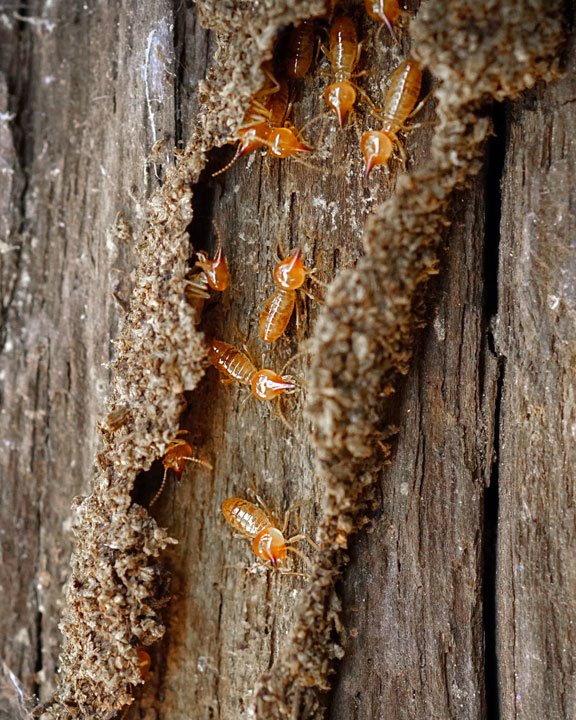
9 Signs of Termites in the Evansville and Newburgh Area
Here are the most common signs of termites that homeowners should look for:
1. Mud Tubes
Subterranean termites build thin, pencil-sized mud tunnels along foundations, walls, or crawl spaces. These protect them as they travel between the soil and your home.
2. Discarded Wings
After swarming, termites shed their wings. Finding piles of small, equal-sized wings near windowsills, doors, or light fixtures is a major warning sign.
3. Hollow or Soft Wood
Termites eat wood from the inside out. Wood may sound hollow when tapped, appear thin, or feel soft and easily punctured.
4. Blistered or Bubbling Paint
Moisture from termite activity can make paint appear bubbled or uneven often mistaken for water damage.
5. Frass (Termite Droppings)
Drywood termites push out small, pellet-like droppings that resemble sawdust. Piles of this material often mean an active colony inside walls or furniture.
6. Tight-Fitting Doors or Windows
Termite damage can warp wood, causing doors or windows to stick or become difficult to open.
7. Damaged or Buckling Floors
Subfloor termite activity can cause wood floors to warp, sag, or feel overly soft in spots.
8. Clicking Sounds in Walls
Termites sometimes make faint tapping or clicking noises as soldier termites communicate or warn the colony.
9. Visible Termites
Spotting winged swarmers indoors is one of the clearest signs your home may already have an active colony.
Contact The #1 Evansville & Newburgh Termite Control Company For a Free Inspection!
Schedule Your Inspection Now!
By submitting your information, you consent to receive text messages at the phone number you have provided. Standard message and data rates may apply. If you wish to stop receiving messages, please reply with the word “Stop” or “Unsubscribe”. Information collected will be used as described in our Privacy Policy.
Frequently Asked Termite Questions
WHAT DOES A TERMITE TREATMENT COST?
The cost of termite treatment depends on your location and the unique needs of your home. For an accurate estimate, schedule a free termite inspection with Precision Pest & Wildlife and learn what the right treatment plan will look like for your property.
HOW DO YOU TREAT TERMITES?
A precise mix of professional-grade products and equipment is essential for eliminating termites effectively. Our technician begins by conducting a full inspection of your home to assess the extent of activity and any damage present. The treatment plan we recommend will be carefully chosen based on the type of termite involved and where the infestation is located.
HOW DO TERMITES GET IN MY HOUSE?
Subterranean termite workers are the members of the colony responsible for feeding on wood. They enter homes by constructing mud tubes, which provide a moist, protected pathway between locations. These workers typically reach houses by following their underground foraging tunnels, also called exploratory tubes, to the foundation or beneath the home’s slab.
ARE TERMITES COVERED BY MY INSURANCE?
Most homeowners’ insurance policies do not cover damage caused by termites, making prevention essential. Termite bonds provide peace of mind by ensuring that professional inspectors regularly visit your home to check for signs of termite activity and any existing damage.
HOW DO I PREVENT TERMITES?
Experts agree that prevention is the most effective way to control termites. When constructing a new home, pretreating the soil before laying the foundation can significantly reduce the risk of future infestations. Additionally, managing moisture inside the home helps make it less attractive to termites and lowers the likelihood of an infestation.